
Starting a fertility journey can feel overwhelming, especially when deciding between different assisted reproductive treatments. Many couples struggling with conception often hear about IUI vs. IVF but are unsure which option is right for them. Understanding the differences, benefits, risks, and success rates of these treatments is essential before making an informed decision.
As a trusted fertility specialist in Melbourne, it is important to help patients understand how fertility treatments work and which approach may offer the best chance of success based on their medical condition, age, and reproductive goals.
Understanding Fertility Challenges
Challenges with conception are not unusual and can affect couples for many different reasons. A couple is typically considered infertile if pregnancy has not occurred after 12 months of regular, unprotected intercourse.
Several factors can contribute to fertility issues, including:
- Ovulation disorders
- Polycystic Ovary Syndrome (PCOS)
- Endometriosis
- Blocked fallopian tubes
- Low sperm count or poor sperm quality
- Advanced maternal age
- Unexplained infertility
Fortunately, modern fertility treatment options in Melbourne provide couples with effective solutions to improve their chances of conception.
What Is IUI?
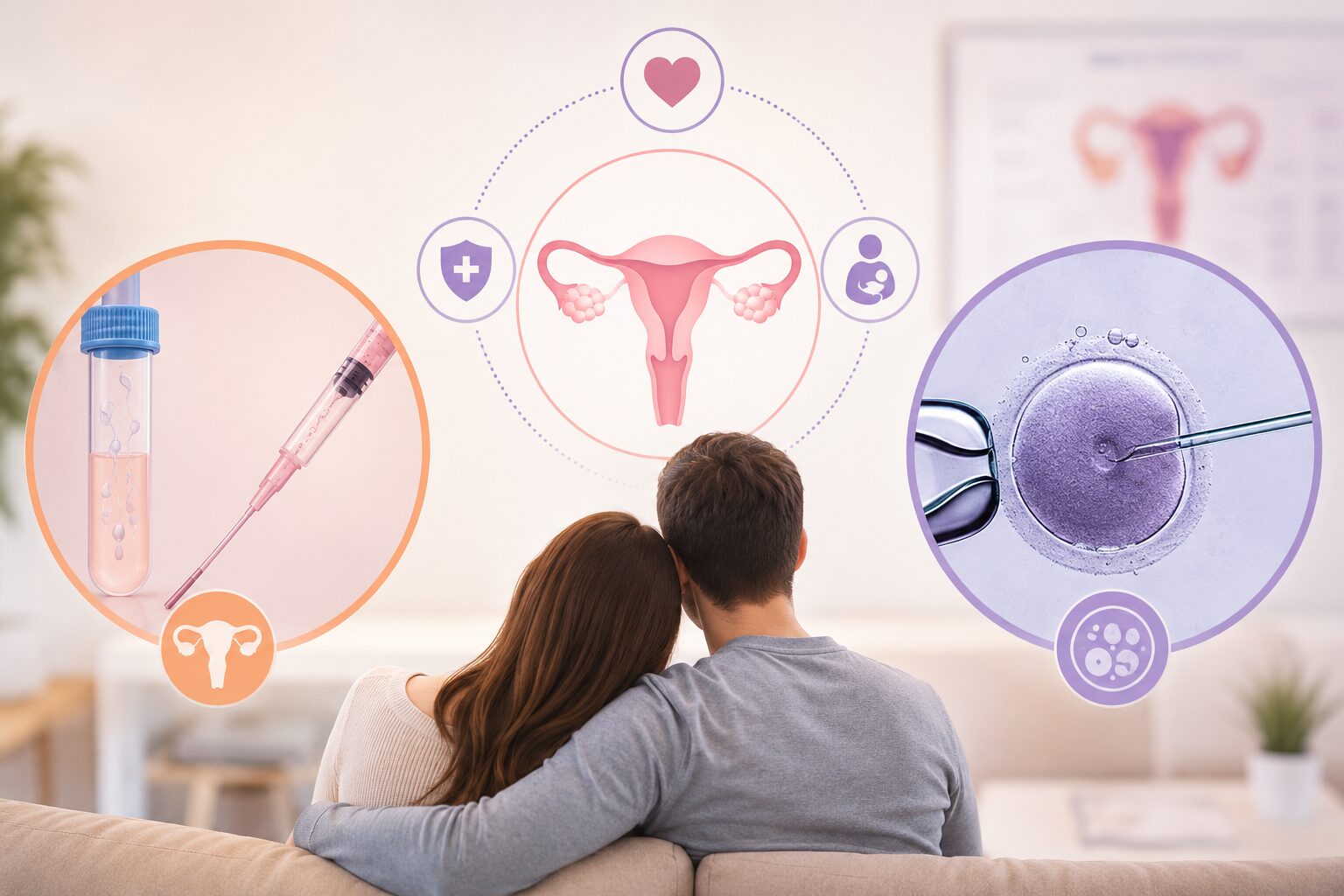
During IUI, a processed sperm sample is carefully introduced into the uterus around ovulation, helping sperm move closer to the egg. The goal is to increase the chances of fertilisation by helping sperm reach the egg more efficiently. IUI is considered less invasive and more affordable than IVF, making it a common first-line fertility treatment.
Who Is IUI Recommended For?
IUI may be suitable for:
- Mild male infertility
- Cervical mucus problems
- Ovulation disorders
- Unexplained infertility
A qualified fertility specialist in Melbourne will usually recommend fertility assessments before deciding whether IUI is appropriate.
What Is IVF?
In Vitro Fertilisation (IVF) is a more advanced fertility treatment in which eggs are retrieved from the ovaries and fertilised with sperm in a laboratory. Once fertilisation occurs, the embryo is placed into the uterus for implantation. An experienced IVF specialist in Melbourne carefully monitors each stage of the process to maximise the chances of successful implantation and pregnancy.
IVF Process Overview
The IVF process generally includes:
- Ovarian stimulation
- Egg retrieval
- Fertilisation in the lab
- Embryo development
- Embryo transfer
IVF is often recommended for couples with more complex fertility issues.
IUI vs IVF Differences
One of the key IUI vs IVF differences is that IVF offers greater control over fertilisation and embryo quality, while IUI relies more on natural fertilisation inside the body. Another important aspect of IUI vs IVF differences is treatment intensity. IVF requires hormone injections and egg retrieval, whereas IUI is simpler and less physically demanding.
Causes of Infertility That May Require IUI or IVF
Different fertility conditions may influence whether IUI or IVF is more appropriate.
Causes Commonly Treated with IUI
- Mild sperm abnormalities
- Irregular ovulation
- Cervical issues
- Mild endometriosis
Causes Commonly Treated with IVF
- Blocked fallopian tubes
- Severe male infertility
- Advanced maternal age
- Recurrent miscarriage
- Failed IUI attempts
An experienced IVF specialist in Melbourne will evaluate medical history, fertility test results, and age before recommending treatment.
Symptoms That May Indicate Fertility Problems
Couples may benefit from seeing a fertility specialist in Melbourne if they notice:
- Irregular menstrual cycles
- Painful periods
- Hormonal imbalances
- Difficulty conceiving after 12 months
- Multiple miscarriages
- Known reproductive health conditions
Men may experience:
- Low libido
- Erectile dysfunction
- Reduced sperm quality
Seeking early evaluation improves the chances of successful treatment.
IUI success rates may vary, but are commonly estimated at around 10–20% per cycle, depending on age, sperm quality, ovulation health, and underlying fertility factors. Many couples wonder when to choose IVF over IUI during their fertility journey.
Benefits Of IUI
- Less Invasive
- IUI is a simple outpatient procedure with minimal discomfort.
- Lower Cost
- Compared to IVF, IUI is more affordable for many couples
- Reduced Medication
- IUI often requires fewer hormonal medications than IVF.
- Shorter Treatment Cycle
- The process is generally quicker and easier to manage emotionally.
Benefits Of IVF
- Higher Success Rates
- IVF provides greater pregnancy success, especially in more complex fertility cases.
- Embryo Selection
- Embryologists can select healthy embryos before transfer.
- Effective for Multiple Fertility Issues
- IVF addresses a broader range of reproductive challenges.
- Fertility Preservation
- Egg or embryo freezing offers future reproductive options.
Many couples seeking advanced fertility treatment options in Melbourne choose IVF after unsuccessful IUI cycles.
Take The First Step Toward Parenthood
Struggling with infertility can be emotionally exhausting, but you don’t have to navigate the journey alone. Consulting an experienced fertility expert can help you understand the best treatment path for your unique needs. Book a consultation with a trusted fertility clinic today and explore personalised solutions designed to improve your chances of conception.
Risks And Considerations
Although IUI and IVF are widely used fertility treatments, each option may involve certain side effects or medical considerations that should be discussed with a fertility specialist before starting treatment.
IUI Risks
- Mild cramping
- Slight infection risk
- Multiple pregnancy risk when fertility drugs are used
IVF Risks
- Ovarian Hyperstimulation Syndrome (OHSS)
- Emotional stress
- Multiple pregnancies
- Procedure-related discomfort
A qualified IVF specialist in Melbourne closely monitors patients throughout treatment to minimise risks.
Emotional Effects Of Fertility Treatments
The fertility journey can be emotionally challenging, not just physically demanding. Couples may experience:
- Anxiety
- Depression
- Emotional fatigue
- Relationship stress
Support groups, counselling, and open communication are important throughout the process. A compassionate fertility specialist in Melbourne often works alongside counsellors to provide emotional support.
Precautions Before Starting Fertility Treatment
Before beginning treatment, patients should focus on optimising overall health.
- Maintain a Healthy Weight
- Avoid Smoking and Alcohol
- Manage Stress
- Follow Medical Advice
- Improve Nutrition
Understanding IUI vs. IVF is essential for couples exploring fertility treatments. While IUI is less invasive and more affordable, IVF offers higher success rates and advanced reproductive solutions for complex fertility challenges.
Whether you are considering IUI as a first step or exploring IVF after unsuccessful attempts, modern fertility treatment options in Melbourne offer hope and support for building the family you desire.
This information is general in nature and should not replace personalised medical advice. Please consult a qualified fertility specialist to discuss your individual circumstances.
Frequently Asked Questions
What is the main difference between IUI and IVF?
The main difference is that IUI places sperm directly into the uterus for natural fertilisation, while IVF fertilises eggs in a laboratory before transferring embryos into the uterus.
Is IVF more painful than IUI?
IUI is minimally invasive and usually causes little discomfort. IVF involves hormone injections and egg retrieval, making it a more intensive procedure.
How many IUI cycles should I try before IVF?
Many fertility specialists recommend trying 3–6 IUI cycles before considering IVF, depending on age and fertility diagnosis.
Who is a good candidate for IUI?
IUI may be suitable for couples with mild male infertility, ovulation disorders, cervical issues, or unexplained infertility.
How do I choose the right fertility specialist in Melbourne?
Look for an experienced specialist who offers personalised treatment plans, advanced fertility technology, transparent communication, and strong patient support.