
An abnormal cervical screening result can raise questions, particularly when you are referred for further examination or treatment. Terms such as HPV, cervical dysplasia, colposcopy and LLETZ may be unfamiliar, making it difficult to understand what each step involves.
Importantly, an abnormal Cervical Screening Test does not automatically mean cervical cancer is present, and not every abnormal result requires treatment.
For women considering a LLETZ procedure Melbourne, understanding why treatment may be recommended, what happens during the procedure and why follow-up matters can support informed decisions about cervical health.
Understanding Abnormal Cervical Cell Changes
Certain types of human papillomavirus (HPV) can cause changes in cervical cells.
HPV is common, and many infections clear on their own. When certain high-risk types of HPV remain in the body over time, they can cause changes in the cells of the cervix. Australia’s Cervical Screening Test detects HPV associated with cervical cancer risk. Further testing or colposcopy may be recommended depending on the results.
A positive HPV result does not necessarily mean that abnormal cells or cancer are present.
What Is Cervical Dysplasia?
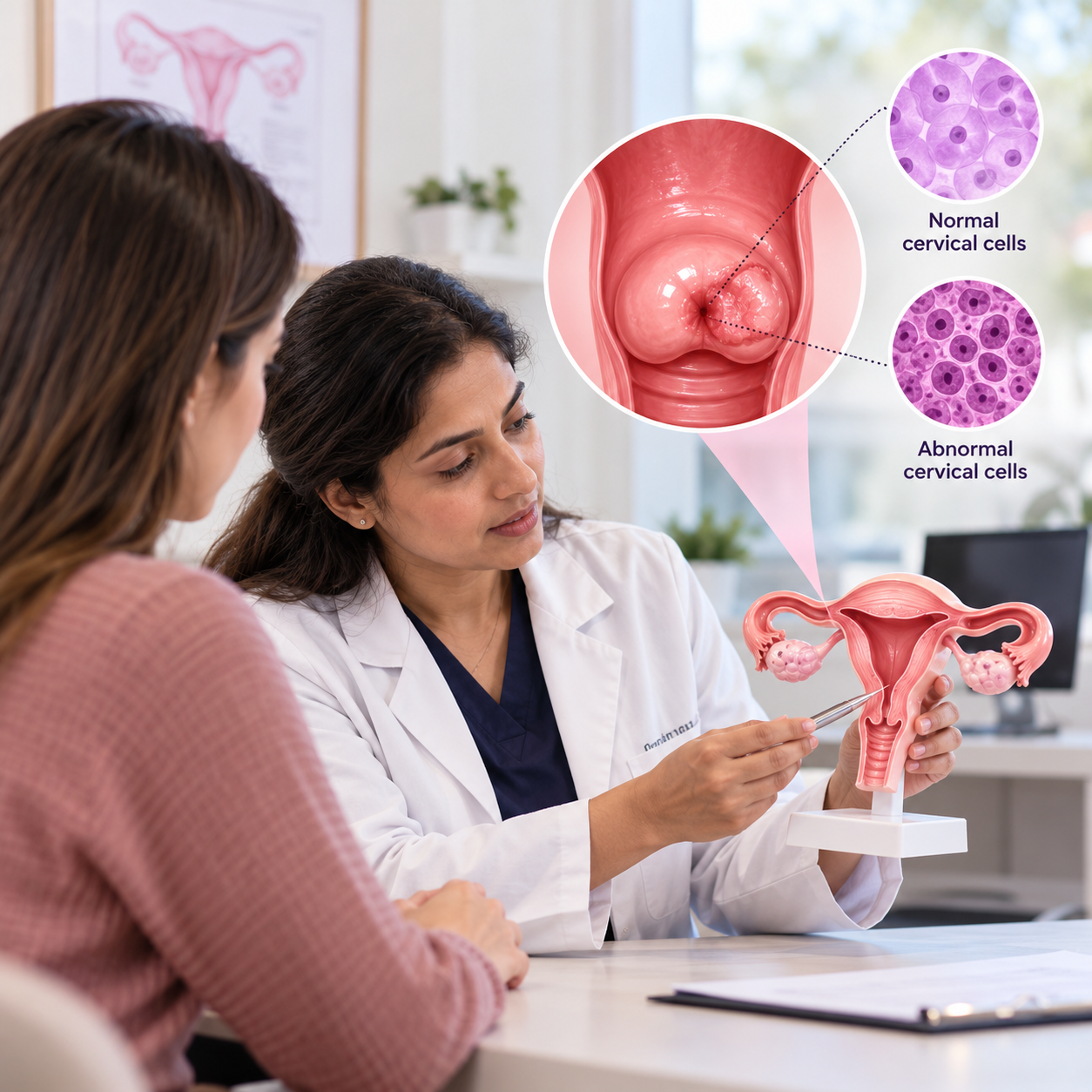
Cervical dysplasia describes abnormal changes in the cells that cover the cervix.
These changes may be classified as low-grade or high-grade, depending on the findings.
Low-grade abnormalities often resolve without treatment and may be monitored.
High-grade abnormalities are more likely to require treatment because they are more likely to progress if left unmanaged.
However, management depends on the specific pathology findings, previous screening history and individual circumstances.
Why Is Colposcopy Recommended?
Colposcopy lets clinicians examine the cervix more closely using a specialised magnifying instrument.
During the examination, a speculum is inserted into the vagina to allow the cervix to be seen. The colposcope remains outside the body.
The clinician may apply a solution to highlight areas needing closer examination.
If needed, the clinician takes a small biopsy and sends it for pathology assessment.
The findings help determine whether monitoring or treatment is appropriate.
Not everyone who undergoes colposcopy requires LLETZ.
What Is the LLETZ Procedure?
LLETZ stands for large loop excision of the transformation zone.
It uses a fine wire loop carrying an electrical current to remove cervical tissue containing abnormal cells.
The removed tissue is sent to a pathology laboratory for further examination.
LLETZ treatment is commonly recommended for selected high-grade cervical abnormalities.
The procedure removes affected tissue while also providing information to guide subsequent care.
Why Is the Transformation Zone Important?
The transformation zone is an area of the cervix where two types of cervical cells meet.
Many significant changes in cervical cells develop in this region.
Its position may vary with age, hormonal changes and previous cervical procedures.
During colposcopy, your specialist assesses the location and extent of the abnormal area and whether they can adequately visualise the transformation zone.
These findings help guide treatment planning.
Your specialist determines how much tissue to remove during LLETZ based on clinical findings rather than a one-size-fits-all approach.
When Is LLETZ Recommended?
LLETZ may be recommended when particular high-grade cervical abnormalities have been identified.
Your specialist considers factors such as:
- Cervical Screening Test results
- Colposcopy findings
- Biopsy results
- The location and extent of abnormal tissue
- Previous cervical screening and treatment history
- Future pregnancy plans
- Individual clinical circumstances
Some low-grade abnormalities can be monitored without immediate treatment.
For selected patients with high-grade changes, management decisions may also involve individual considerations and current clinical guidelines.
Have questions about your cervical screening results?
If you have been referred for colposcopy or advised that LLETZ may be appropriate, Dr Priya Rajagopal can review your results, explain the findings and discuss the next steps based on your individual circumstances.
How Should You Prepare for LLETZ?
Before the procedure, your healthcare team will explain what to expect and provide preparation instructions.
Tell your specialist about any medications, allergies, previous cervical procedures or possibility of pregnancy.
It is also helpful to discuss future pregnancy plans.
Depending on the anaesthetic approach, you may receive instructions about fasting, medication adjustments or arranging transport home.
Follow the specific guidance provided by your treating team.
What Happens During the Procedure?
LLETZ is often performed using local anaesthetic, although general anaesthesia may be appropriate in some circumstances.
During the procedure:
- A speculum is inserted to visualise the cervix.
- Local anaesthetic is administered where appropriate.
- The area requiring treatment is identified.
- A fine wire loop removes the affected cervical tissue.
- Bleeding is controlled using appropriate techniques.
- The removed tissue is sent for pathology examination.
The procedure is usually relatively brief, although the overall appointment or hospital visit may take longer.
Your specialist will explain the planned approach and what you can expect.
What Happens During Recovery?
Some vaginal bleeding, discharge or mild cramping can occur while the cervix heals.
Recovery varies between individuals.
Your healthcare team will provide instructions about activities such as exercise, swimming, tampon use and sexual intercourse.
These recommendations support healing and reduce the risk of complications.
Seek medical advice promptly if you experience heavy bleeding, fever, worsening pelvic pain or unpleasant-smelling discharge.
Why Are Pathology Results Important?
The tissue removed during LLETZ is examined by a pathologist.
The report can provide further information about the type and extent of the cervical abnormality.
It may also indicate whether abnormal cells extend to the edges of the removed tissue, known as the margins.
Clinicians consider margin findings alongside other clinical information when planning follow-up.
An abnormal margin result does not automatically mean another procedure is required.
What Follow-Up Is Needed After LLETZ?
Follow-up is an essential part of cervical care.
For women treated for histologically confirmed high-grade squamous cervical abnormalities, Australia’s National Cervical Screening Program recommends HPV-based Test of Cure surveillance.
Under this pathway, HPV testing is generally done annually until HPV is not detected on two consecutive tests, after which routine screening may resume.
Other abnormalities and individual circumstances may require different follow-up arrangements.
Your specialist will explain the appropriate schedule based on your pathology and treatment history.
Can LLETZ Affect Future Pregnancy?
Many women who undergo LLETZ later have pregnancies without complications.
However, cervical excisional treatment can be associated with an increased risk of certain pregnancy complications, including preterm birth.
The risk may depend on how much cervical tissue is removed and whether you have had repeat procedures.
If you are planning pregnancy, discussing your reproductive goals before treatment can help inform clinical decisions.
Are There Alternatives to LLETZ?
Not every cervical abnormality requires immediate treatment.
Some low-grade changes can be monitored, while selected high-grade abnormalities may require an individualised discussion about management.
The most appropriate treatment for cervical dysplasia in Melbourne depends on the type of abnormality, screening and biopsy findings, and individual circumstances.
Recommend procedures to treat abnormal cervical cells only when clinically indicated.
Conclusion
The LLETZ procedure is an established treatment for selected abnormal cervical cell changes. It can remove affected tissue while providing important pathology information.
However, an abnormal Cervical Screening Test does not automatically mean that LLETZ is required.
If you have been advised to consider LLETZ in Melbourne, Dr Priya Rajagopal can explain your results, discuss treatment options, and provide guidance on recovery and follow-up based on your circumstances.
Frequently Asked Questions
Does an abnormal Cervical Screening Test always mean I need LLETZ?
No. Many HPV infections and some cervical cell changes can be monitored without immediate treatment. LLETZ is generally recommended when specific abnormalities are identified, and treatment is clinically appropriate.
Is the LLETZ procedure painful?
LLETZ is often performed using local anaesthetic to reduce discomfort. Some women may experience pressure, mild cramping or discomfort during or after the procedure. Your healthcare team can discuss pain management options.
How long does it take for the cervix to heal after LLETZ?
Healing generally takes several weeks, although recovery varies. Some bleeding or discharge may occur during this time. Follow your specialist’s instructions about exercise, swimming, tampon use and sexual intercourse.
Can abnormal cervical cells return after LLETZ?
Yes. Although LLETZ removes abnormal tissue, HPV may remain detectable and cervical cell changes can develop again. Recommended follow-up testing helps monitor cervical health after treatment.
Can I become pregnant after a LLETZ procedure?
Many women conceive and have pregnancies after LLETZ. However, certain pregnancy risks may be higher following cervical excisional treatment, particularly after larger or repeated procedures. Your specialist can discuss these considerations in relation to your pregnancy plans.